

We often assume that noise comes from outside — traffic, neighbors, the city. Yet in many cases, the noise that exhausts us is already inside our own homes.
A room can be beautiful, bright, and carefully styled, and still feel uncomfortable to live in. Voices echo, sounds overlap, and we quickly feel distracted, irritable, or mentally tired. Concentration becomes more difficult, even during simple activities like reading, working, or having a conversation.
This discomfort is rarely about volume.
Moderate noise, when poorly absorbed or constantly present, is enough to overload the brain. In modern interiors — often minimalist and filled with hard surfaces — sound bounces off walls, ceilings, and floors, creating a confused sound environment.
As a result, we speak louder, lose focus more easily, and the space becomes mentally demanding.
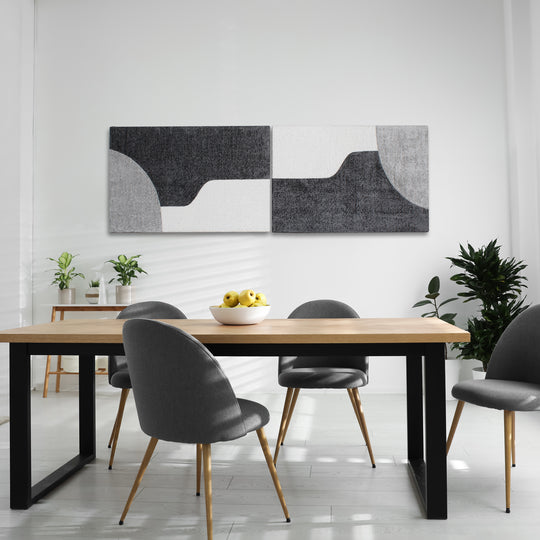
CONCERTO Artwork
Creating a calming home is not only about how it looks.
Sound comfort is an essential part of well-being. Textiles, sound-absorbing wall surfaces, and certain decorative elements help soften the acoustic environment and make spaces more pleasant to live in.
When sound is better controlled, the difference is immediate:
the atmosphere settles, focus returns, and the home feels more welcoming.
👉 To better understand why some rooms feel noisy and how to improve acoustic comfort without compromising aesthetics, read the full article on Marie Dooley Acoustic.
